
Search for:
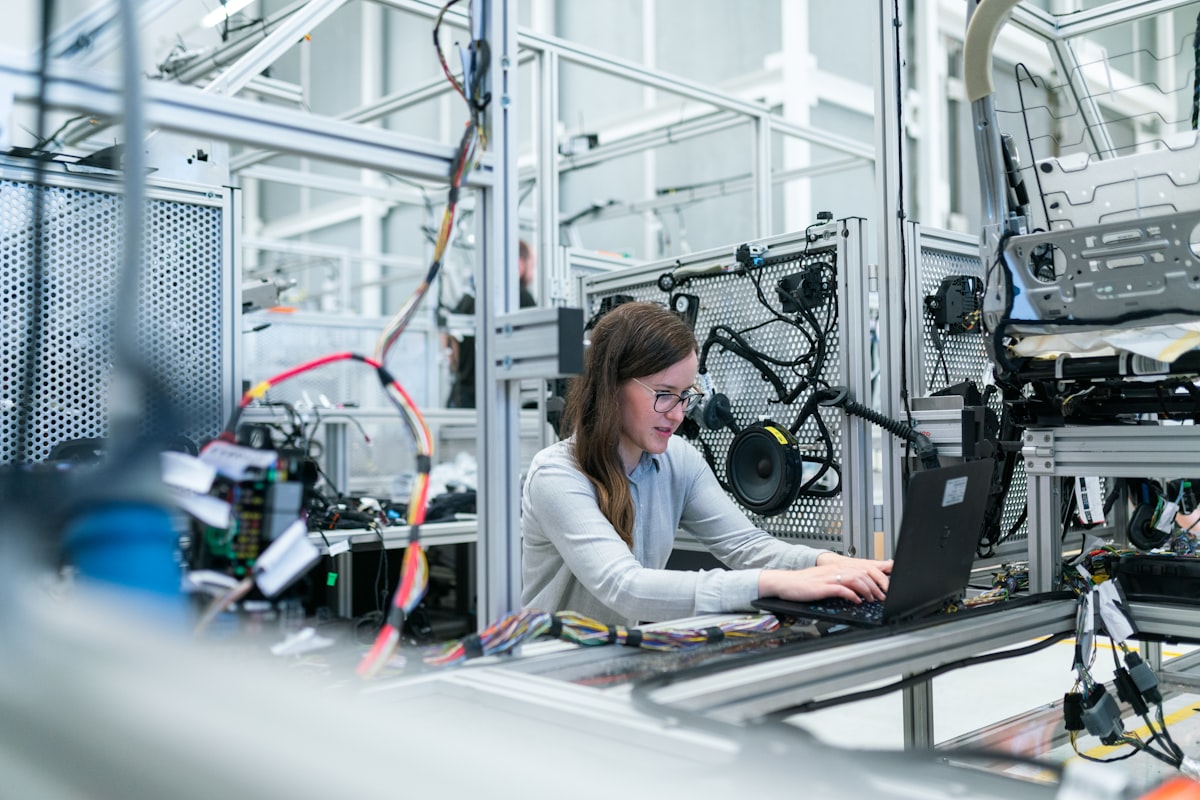
Modern electronic assembly line in an Irish manufacturing facility.
Manufacturing Companies in Ireland: Key Sectors, Leading Companies & What Buyers Should Know

Ireland is often associated with technology, pharmaceuticals and multinational companies. But manufacturing is much broader than those headlines suggest.

Irish manufacturing spans pharmaceuticals and biopharmaceuticals, medical technology, food and ingredients, engineering, electronics, chemicals, industrial products and other specialised areas.

For a company searching for manufacturing companies in Ireland, however, the difficult part is not finding a list of names.

The difficult part is understanding which type of manufacturer is appropriate for a particular product, process, volume and supply-chain requirement.

That distinction matters.

A pharmaceutical manufacturer, a medical-device manufacturer, an injection-moulding supplier and an automotive-component manufacturer may all be described as manufacturing companies, but their capabilities, quality systems, production models and buyer requirements can be completely different.

This guide looks at the Irish manufacturing landscape from a buyer’s perspective.


What is the manufacturing sector like in Ireland?

Manufacturing remains one of the most economically significant parts of the Irish economy.

The Central Statistics Office reported that manufacturing was the largest sector of the Irish economy by output and gross value added in 2025. Manufacturing generated approximately €345.1 billion in output and €176.8 billion in gross value added at current prices in that year.

But there is an important qualification when interpreting Irish manufacturing statistics.

Ireland has a highly globalised manufacturing economy, and official industrial production statistics include activity associated with contract manufacturing and outsourcing. The CSO specifically warns that outsourcing and contract manufacturing can create substantial volatility in short-term figures.

This means that a company researching Irish manufacturing should look beyond a single headline production figure.

The more useful question is:

What manufacturing capability does Ireland actually offer for my product or supply-chain requirement?


Major Manufacturing Sectors in Ireland

Ireland’s manufacturing base is not concentrated in one industry.

Several sectors are particularly important.

1. Pharmaceutical and Biopharmaceutical Manufacturing

Pharmaceutical and biopharmaceutical manufacturing is one of Ireland’s best-known industrial strengths.

Ireland has attracted major international pharmaceutical companies and manufacturing operations over several decades.

This sector includes areas such as:

  • Pharmaceutical production
  • Active pharmaceutical ingredients
  • Biopharmaceutical manufacturing
  • Drug development
  • Process development
  • Manufacturing technologies
  • Supporting engineering and services

IDA Ireland identifies pharmaceuticals and biopharmaceuticals among Ireland’s core sectors and continues to focus on the sector as part of its investment strategy.

For buyers, pharmaceutical manufacturing is a highly specialised field.

A company looking for general product manufacturing should not assume that a pharmaceutical manufacturer is automatically an appropriate manufacturing partner.


2. Medical Technology Manufacturing

Medical technology is another major part of Ireland’s manufacturing ecosystem.

IDA Ireland says Ireland’s MedTech sector has a 50-year track record, includes more than 300 companies, employs more than 50,000 people, and includes 14 of the world’s top 15 MedTech companies.

The sector covers areas including:

  • Medical devices
  • Diagnostics
  • Orthopaedics
  • Vascular products
  • Neuromodulation
  • Ophthalmic products
  • Drug-delivery devices
  • Connected and digital health technologies

For businesses sourcing medical products, manufacturing capability is only one part of the decision.

Quality systems, regulatory requirements, validation, traceability and production controls can be equally important.


3. Food and Food-Ingredient Manufacturing

Ireland also has a significant food and ingredients manufacturing industry.

The sector includes:

  • Dairy
  • Food ingredients
  • Prepared foods
  • Beverages
  • Meat processing
  • Bakery products
  • Nutritional products
  • Specialty foods

This is an important example of why the phrase “manufacturing companies in Ireland” covers very different business models.

A food manufacturer may be suitable for high-volume production of an established product but completely unsuitable for an engineered industrial component.

The right manufacturer depends on the product.


4. Engineering and Industrial Manufacturing

Ireland also has a broad engineering and industrial manufacturing base.

This includes companies involved in areas such as:

  • Industrial equipment
  • Metal products
  • Machinery
  • Automation
  • Engineering components
  • Fabrication
  • Process equipment
  • Electrical equipment
  • Industrial systems

For product companies, this category can be particularly relevant when looking for:

  • Custom components
  • Fabricated parts
  • Mechanical assemblies
  • Industrial products
  • Engineering support
  • Prototype-to-production capabilities

5. Electronics and Semiconductor Manufacturing

Ireland also has an important electronics and semiconductor presence.

The wider technology-manufacturing ecosystem includes semiconductor operations, electronic components, instrumentation and related engineering capabilities.

This sector demonstrates another characteristic of Irish manufacturing:

Ireland’s manufacturing economy is strongly connected to international supply chains.

Companies may have Irish operations while sourcing components, materials or subassemblies internationally.

For procurement teams, this makes supply-chain management just as important as the physical manufacturing facility.


Some of the Largest Manufacturing Companies in Ireland

There is no single definitive ranking of the “best” manufacturing companies in Ireland.

Company size, revenue, employment and manufacturing capability are different measures.

Current commercial company datasets show a large and diverse manufacturing population in Ireland. One 2026 database lists more than 16,000 active manufacturing companies, although counts vary significantly depending on the classification system and companies included.

Examples appearing among large manufacturing-related businesses include:

  • Apple
  • CRH
  • Linde
  • Johnson Controls
  • Diageo
  • Analog Devices
  • Kerry Group
  • Smurfit Kappa
  • Stryker
  • Medtronic
  • Abbott
  • Intel
  • Pfizer
  • MSD

However, a list of large companies is not the same thing as a list of suitable manufacturing suppliers.

That distinction is crucial for procurement.

A multinational corporation may have enormous manufacturing operations but may not accept external manufacturing projects from smaller product companies.

Therefore, buyers should evaluate capability and commercial fit, not simply company size.


How Many Manufacturing Companies Are There in Ireland?

There is no single number that should be treated as universally correct.

Different databases use different classification systems and definitions.

For example, one current commercial dataset reports approximately 16,745 Irish manufacturing companies, while another reports approximately 16,266 active companies.

The difference illustrates an important point:

Always check how a source defines “manufacturing company” before comparing company counts.

The CSO uses formal industrial classifications for its manufacturing statistics. Its Prodcom survey covers enterprises classified under specific NACE categories and had a survey population of 5,589 for its 2025 reference period.

These figures should not simply be added together or treated as interchangeable.


Where Are Manufacturing Companies Located in Ireland?

Manufacturing is distributed throughout the country, although some regions have particularly strong industrial ecosystems.

Dublin, Cork and Galway are among the major manufacturing locations identified by commercial company databases.

But location should not be the first filter for a manufacturing buyer.

Instead, start with:

  1. Product requirements
  2. Manufacturing process
  3. Required materials
  4. Production volume
  5. Quality requirements
  6. Tooling requirements
  7. Certifications
  8. Lead time
  9. Logistics
  10. Total landed cost

Only then should location become a major selection criterion.


How to Choose a Manufacturing Company in Ireland

Finding manufacturers is relatively easy.

Finding the right manufacturer is harder.

Before selecting a manufacturing partner, consider the following.

1. Manufacturing capability

Does the company actually have experience with your manufacturing process?

For example:

  • Injection moulding
  • Die casting
  • Sand casting
  • Investment casting
  • Extrusion
  • CNC machining
  • Fabrication
  • Assembly

The terminology matters because different processes have different tooling, tolerances, materials and volume requirements.


2. Production volume

A manufacturer specialising in high-volume production may not be interested in a small production run.

Likewise, a supplier designed for low-volume or customised production may not have the economics or capacity for mass production.

Ask about:

  • Minimum order quantities
  • Production capacity
  • Batch sizes
  • Lead times
  • Scalability

3. Quality systems

Quality should be evaluated before production begins, not after a shipment arrives.

Depending on the product, buyers may need to examine:

  • Quality management systems
  • Inspection procedures
  • Material certification
  • Testing
  • Traceability
  • First-article inspection
  • Production monitoring
  • Final inspection

4. Product development capability

If the product is still being designed, manufacturing capability alone may not be enough.

A useful manufacturing partner may also need to understand:

  • Product design
  • Design for manufacturing
  • Prototyping
  • Tooling
  • Material selection
  • Production engineering
  • Cost optimisation

The earlier manufacturing considerations enter the product-development process, the fewer expensive changes may be required later.


5. Supply-chain capability

Manufacturing does not end when the product leaves the factory.

A buyer should consider:

  • Packaging
  • Inspection
  • Documentation
  • Freight
  • Customs
  • Inventory
  • Delivery schedules
  • Supplier communication
  • Contingency planning

This becomes particularly important when manufacturing involves several countries.


Irish Manufacturing vs Overseas Manufacturing

This is where the decision becomes more complicated.

Manufacturing in Ireland can provide advantages such as:

  • Geographic proximity to Irish buyers
  • Easier local communication
  • Potentially shorter supply chains
  • Access to Ireland’s specialised industrial ecosystem
  • Strong engineering and technical capabilities

But overseas manufacturing can sometimes provide:

  • Different cost structures
  • Larger supplier ecosystems for certain products
  • Established manufacturing clusters
  • Access to specialised processes
  • High-volume production options

There is therefore no universal answer to:

“Should I manufacture in Ireland?”

The better question is:

Which manufacturing location provides the best combination of quality, capability, cost, lead time and supply-chain risk for this particular product?


Why Manufacturing Sourcing Is Becoming More Important

Manufacturing decisions are no longer simply about finding the lowest unit price.

Companies increasingly need to consider:

  • Supplier reliability
  • Quality
  • Geopolitical risk
  • Logistics
  • Inventory
  • Lead times
  • Supplier concentration
  • Compliance
  • Total landed cost

The CSO’s manufacturing statistics also illustrate how interconnected Irish manufacturing is with international outsourcing and contract manufacturing.

That means modern manufacturing management often involves more than selecting a factory.

It involves coordinating the entire path from:

Product → Supplier → Production → Quality → Inspection → Logistics → Delivery


What About Smaller Irish Manufacturers?

Large multinational manufacturers receive most of the headlines, but smaller Irish manufacturers are important too.

Commercial databases contain thousands of smaller manufacturing businesses across Ireland, with many classified as micro or small companies.

For a product company, a smaller manufacturer can sometimes be a better fit because it may offer:

  • More flexibility
  • Direct communication
  • Custom production
  • Smaller production runs
  • Faster decision-making

Again, the correct choice depends on the product and production requirements.


Manufacturing in Ireland: What Should Buyers Do Next?

If you are searching for manufacturing companies in Ireland, don’t start by copying the first directory you find.

Start by defining the manufacturing requirement.

Step 1: Define the product

What exactly needs to be manufactured?

Step 2: Define the process

What manufacturing process is required?

Step 3: Define the volume

How many units are required?

Step 4: Define quality requirements

What tolerances, certifications, testing and inspection requirements apply?

Step 5: Request comparable quotations

Ask potential suppliers to quote against the same specification.

Step 6: Compare total cost

Don’t compare unit price alone.

Include:

  • Tooling
  • Packaging
  • Inspection
  • Freight
  • Customs
  • Duties
  • Rework
  • Inventory
  • Quality risk

Step 7: Evaluate the supplier

Look at capability, communication, quality controls, capacity and track record.


Where GMM Fits

For companies that do not simply need a factory but need help coordinating the manufacturing process, the challenge is broader than finding a company on a directory.

GMM works across product development, engineering, supplier sourcing, manufacturing management, quality control, pre-shipment inspection and logistics.

That type of support can be particularly relevant when a company needs to coordinate manufacturing across international supply chains rather than simply place an order with a local factory.

The objective is not necessarily to find the cheapest manufacturer.

It is to find a manufacturing solution that works commercially from product development through production and delivery.


Final Thoughts

Ireland has a broad and internationally connected manufacturing economy.

The country is particularly recognised for sectors including pharmaceuticals, biopharmaceuticals, medical technology, food, engineering, electronics and other specialised manufacturing activities. IDA Ireland continues to identify pharmaceuticals, medical technologies, engineering, food and other sectors among Ireland’s strategic industrial strengths.

But businesses searching for manufacturing companies in Ireland should avoid treating the market as one homogeneous group.

The right manufacturing partner depends on:

Capability + Quality + Volume + Cost + Lead Time + Supply-Chain Risk + Commercial Fit

That is ultimately more useful than simply having the longest list of manufacturers.
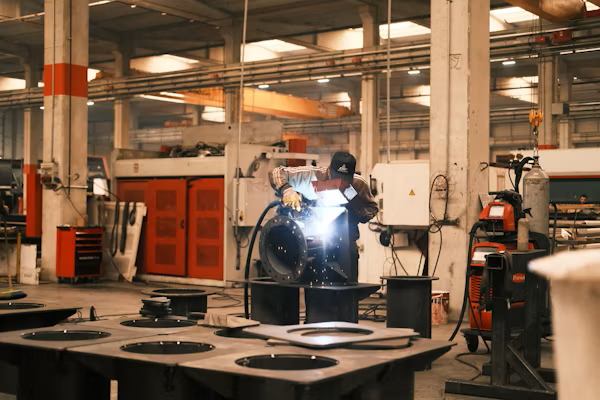

Modern automated glass manufacturing machinery producing bottles on a conveyor line.
Manufacturing Companies in Ireland: How Modern Glass Machinery Is Improving Production Efficiency

Ireland’s manufacturing sector is continuing to evolve, and technology is playing a bigger role in how factories manage production, quality, labour and operating costs.

For manufacturing companies in Ireland involved in glass processing, fabrication or related industrial production, modern glass machinery can make a noticeable difference. The right equipment is no longer simply about producing more glass in less time. It is also about improving consistency, reducing waste, controlling energy use and keeping production running with fewer interruptions.

This is where automation, machine monitoring, better maintenance and connected production systems are becoming increasingly important.

Ireland’s wider manufacturing sector is already moving in this direction. Recent industry research shows that Irish manufacturers remain focused on growth and are investing in technology, while energy costs, skills shortages and cybersecurity remain significant concerns. Tilly Ireland

For glass manufacturers in particular, these pressures make efficient machinery and well-managed production processes increasingly important.

Why efficiency matters for manufacturing companies in Ireland

Running a manufacturing facility has never been just about the cost of raw materials.

There are also labour costs, energy consumption, machine maintenance, downtime, material waste and quality-control issues to consider. A small inefficiency repeated hundreds or thousands of times can eventually become a significant cost.

This is particularly relevant to glass processing.

Glass needs to be handled carefully throughout production. Cutting, drilling, edging, washing, tempering, laminating and insulating processes all require precision. If one part of the production line is unreliable, the effect can extend to other stages of the operation.

For example, a poorly maintained cutting system can result in inaccurate dimensions. That can lead to additional handling, rejected pieces or problems further down the production process.

Modern machinery is helping manufacturers approach these problems differently.

Instead of simply increasing production speed, manufacturers can use automation and machine data to understand where time, energy and materials are being lost.

How modern glass machinery is changing production

Modern glass-processing equipment combines mechanical engineering with automation, sensors, software and increasingly sophisticated monitoring systems.

The objective is relatively simple: make the production process more predictable.

A modern automated line can coordinate several stages of production while reducing unnecessary manual handling. Connected systems can also provide operators with information about machine performance, production status and potential problems.

Digital glass production is increasingly focused on real-time monitoring, automated control, data-based optimisation, quality control and more transparent production metrics.

For manufacturing companies in Ireland, this can create several practical benefits.

1. Faster and more consistent production

One of the obvious advantages of modern machinery is improved production speed.

Automated glass cutting, handling and processing systems can perform repetitive operations consistently throughout a shift. This is particularly useful when manufacturers are dealing with large production volumes or tight delivery schedules.

But speed on its own is not enough.

A machine that works quickly but produces inconsistent results can create more problems than it solves. Modern equipment therefore focuses on combining speed with precision and repeatability.

Automation can reduce variations between operators and help maintain consistent processing parameters.

That can be particularly valuable for manufacturers producing architectural glass, insulating glass units, processed panels or other products where dimensional accuracy and surface quality matter.

2. Better control over glass waste

Material waste is another area where machinery can have a direct effect on production costs.

Glass is not an inexpensive material to waste, particularly when additional processing has already been carried out.

Accurate cutting and better production planning can help manufacturers make better use of available sheets and reduce unnecessary offcuts.

Digital production systems can also provide better visibility into what is being produced and how materials are being used.

This is one reason modern glass manufacturing is moving toward increasingly connected production environments. When machinery and software can exchange production information, manufacturers have more opportunities to identify inefficiencies instead of relying entirely on manual records.

The technology is not a replacement for experienced production teams. Rather, it gives those teams better information to make decisions.

3. Reduced machine downtime

For many manufacturing businesses, downtime can be more expensive than the cost of a replacement part.

When an important machine stops unexpectedly, production may have to stop with it. Operators can be left waiting, orders can be delayed and maintenance teams may have to find a solution under pressure.

This is why preventive and predictive maintenance are becoming increasingly important.

Modern machinery can provide information about operating conditions that helps maintenance teams identify potential issues before they become major failures.

Connected machine systems are already being used in the glass industry to monitor equipment, plan maintenance activities and improve service response.

This approach changes the maintenance conversation from:

“The machine has broken. What do we do now?”

to:

“The machine is showing signs of a problem. How can we deal with it before production is affected?”

That is a significant difference for a busy manufacturing facility.

4. More effective maintenance and machinery parts management

Even the most advanced glass-processing machinery still contains components that wear over time.

Bearings, belts, rollers, cutting tools, seals, motors, pumps and other mechanical or electrical components can eventually require inspection, repair or replacement.

A good maintenance strategy therefore needs to consider both the machinery itself and the availability of the parts required to keep it operating.

For manufacturing companies in Ireland, having access to suitable replacement machinery parts can be particularly important when equipment is essential to daily production.

Waiting several days for a relatively small component can have a much bigger financial impact if an entire production line is unavailable.

This is why experienced machinery suppliers and service providers often recommend keeping critical spare parts available and maintaining a clear replacement schedule for components with predictable wear.

5. Energy efficiency is becoming more important

Energy is another major consideration for modern manufacturing.

Glass production and processing can involve energy-intensive equipment, including furnaces, heating systems, compressors, motors and other machinery.

Better equipment alone cannot eliminate energy costs, but modern automation and monitoring can make energy consumption more visible.

That visibility matters.

If manufacturers can identify when equipment is consuming more energy than expected, they have a starting point for investigating the reason.

The wider glass industry is increasingly using digital technologies to monitor and optimise energy and production processes. AI and data-driven systems are also being explored for predictive maintenance and energy optimisation.

Research into glass-production energy use has also highlighted the potential for real-time measurement and automated control to improve the efficiency of systems such as compressed-air plants.

For an Irish manufacturing business facing continued pressure on operating costs, these improvements can be worth investigating.

6. Automation can help address labour pressures

Automation is sometimes discussed as though the main objective is to replace people.

In modern manufacturing, the reality can be more practical.

Many factories are struggling to recruit and retain people for repetitive, physically demanding or difficult-to-staff tasks. Automation can take some of that workload away while allowing skilled employees to focus on supervision, quality, maintenance and problem-solving.

This is becoming increasingly relevant in Ireland.

Current Irish manufacturing discussions highlight labour and skills shortages alongside the need to improve productivity. Collaborative automation is being promoted as one way of supporting existing teams while automating repetitive or physically demanding work.

For a glass-processing company, that could mean automating tasks such as material movement, machine loading, unloading, inspection or repetitive handling.

The important point is that automation should solve a specific production problem.

A manufacturer does not necessarily need to automate an entire factory overnight.

Starting with one bottleneck can often provide a clearer way to measure whether an investment is delivering the expected return.

7. Better quality control

Quality problems are expensive because the cost isn’t always limited to the rejected piece of glass.

There may also be wasted processing time, additional labour, delayed orders and dissatisfied customers.

Modern glass machinery can improve consistency by controlling processing parameters more accurately.

Automation can also reduce some of the variability associated with repetitive manual operations.

As digital manufacturing develops, data from machines can increasingly be used to identify patterns in production and quality.

This opens the door to more proactive quality management.

Instead of discovering a problem after a batch has been completed, manufacturers can work toward identifying changes in the process while production is taking place.

8. Connecting machines can improve the whole production process

One of the biggest changes in modern manufacturing is that individual machines are becoming less isolated.

A glass cutting machine, conveyor, drilling machine, washing system, tempering furnace or insulating-glass line can potentially become part of a larger connected production environment.

When these systems communicate effectively, manufacturers can gain a clearer picture of the production flow.

Plant-wide automation is already being used in the glass industry to bring different automation components together, with benefits including greater plant transparency, easier maintenance and improved control of quality, production and energy efficiency.

This is an important development because improving one machine does not necessarily improve the entire factory.

The real gains often come from looking at the complete production process.

Modernisation does not always mean replacing everything

One misconception about modern manufacturing technology is that improving a factory necessarily means purchasing an entirely new production line.

That is not always the case.

Depending on the age and condition of existing machinery, manufacturers may be able to improve performance through targeted upgrades.

These could include:

  • Replacing worn mechanical components
  • Upgrading motors or drives
  • Installing new sensors
  • Improving machine controls
  • Updating PLC systems
  • Adding monitoring technology
  • Improving material handling
  • Retrofitting automation
  • Introducing preventive maintenance systems
  • Replacing outdated components with modern alternatives

A properly planned upgrade can sometimes extend the useful life of existing machinery while addressing the specific weaknesses that are affecting production.

The right decision will depend on the machine’s condition, production requirements, availability of parts and the expected return on investment.

What should manufacturing companies in Ireland consider before investing?

Buying the newest machine available is not necessarily the best strategy.

Before investing in new glass machinery or upgrading existing equipment, manufacturers should look at the complete production process.

A useful starting point is to ask a few straightforward questions:

Where is the biggest bottleneck?

Is production being slowed down by cutting, handling, edging, washing, tempering, inspection or another stage?

Fixing the biggest bottleneck first can provide a much clearer return than making several unrelated upgrades.

How much downtime is costing the business?

Look beyond the repair invoice.

Consider lost production, delayed deliveries, labour costs and potential customer impact.

This can help establish how much investment in maintenance or equipment reliability is justified.

Which components fail most frequently?

Maintenance records can reveal patterns.

If the same components repeatedly require replacement, it may be worth investigating whether the underlying problem is poor component selection, operating conditions, incorrect maintenance or simply normal wear.

Can existing equipment be upgraded?

Before replacing a machine, investigate whether an engineering retrofit or control-system upgrade could solve the problem.

In some situations, modernising part of an existing system may be more practical than replacing an entire line.

Can the new equipment integrate with existing machinery?

A new machine should not become another isolated system.

Manufacturers should consider how equipment will communicate with existing machinery, production software and maintenance processes.

The future of glass manufacturing is becoming more connected

The direction of the industry is clear.

Glass manufacturing is moving toward greater automation, data collection, connected machinery and more intelligent maintenance.

Recent developments in the industry include digital platforms that monitor machine fleets, support maintenance planning and provide real-time production information.

AI and digital twins are also moving beyond experimentation. Glass Futures, for example, has developed an AI-driven digital twin of a glass furnace that can model operating conditions and predict how changes could affect production.

Not every manufacturing company needs this level of technology today.

For many businesses, the most useful improvement may be something much simpler: a more reliable cutting machine, better maintenance planning, faster access to spare parts or an automation upgrade that removes one persistent production bottleneck.

The important thing is to invest based on the actual needs of the factory.

Choosing the right glass machinery partner

Technology is only one part of improving production efficiency.

The support behind the machinery matters just as much.

When considering a machinery supplier or engineering partner, manufacturing companies should look beyond the initial equipment price.

Consider whether the supplier can provide:

  • Machinery installation and commissioning
  • Preventive maintenance
  • Emergency repair support
  • Replacement machinery parts
  • Technical troubleshooting
  • Machinery upgrades
  • Operator training
  • Equipment inspections
  • Engineering advice
  • Long-term service support

A reliable support relationship can make a significant difference over the working life of a machine.

The objective should not simply be to purchase equipment.

It should be to keep that equipment productive.

Final thoughts

For manufacturing companies in Ireland, improving production efficiency is becoming less about doing everything faster and more about making the entire manufacturing process more predictable.

Modern glass machinery can contribute to that goal through automation, precision, better monitoring, improved maintenance and more efficient use of materials and energy.

But technology should always have a purpose.

The best investment may be a completely new processing line. In another factory, it could be a machinery upgrade, a replacement part, improved preventive maintenance or automation of one repetitive task.

The starting point is understanding where production is losing time, money or materials.

Once those problems are clear, the right machinery and engineering solution becomes much easier to identify.

For glass manufacturers and other industrial businesses, that is ultimately what modern manufacturing technology should deliver: better production, fewer interruptions, consistent quality and a factory that is prepared for what comes next.