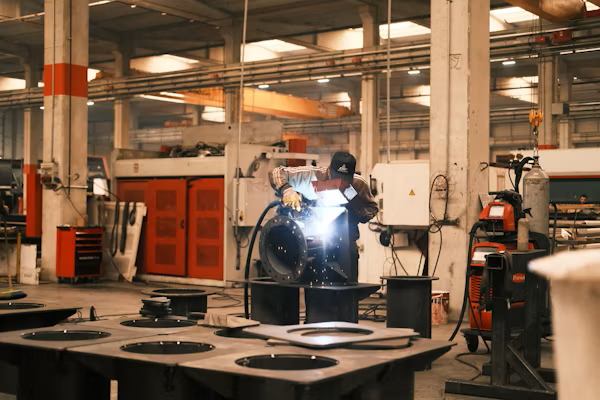
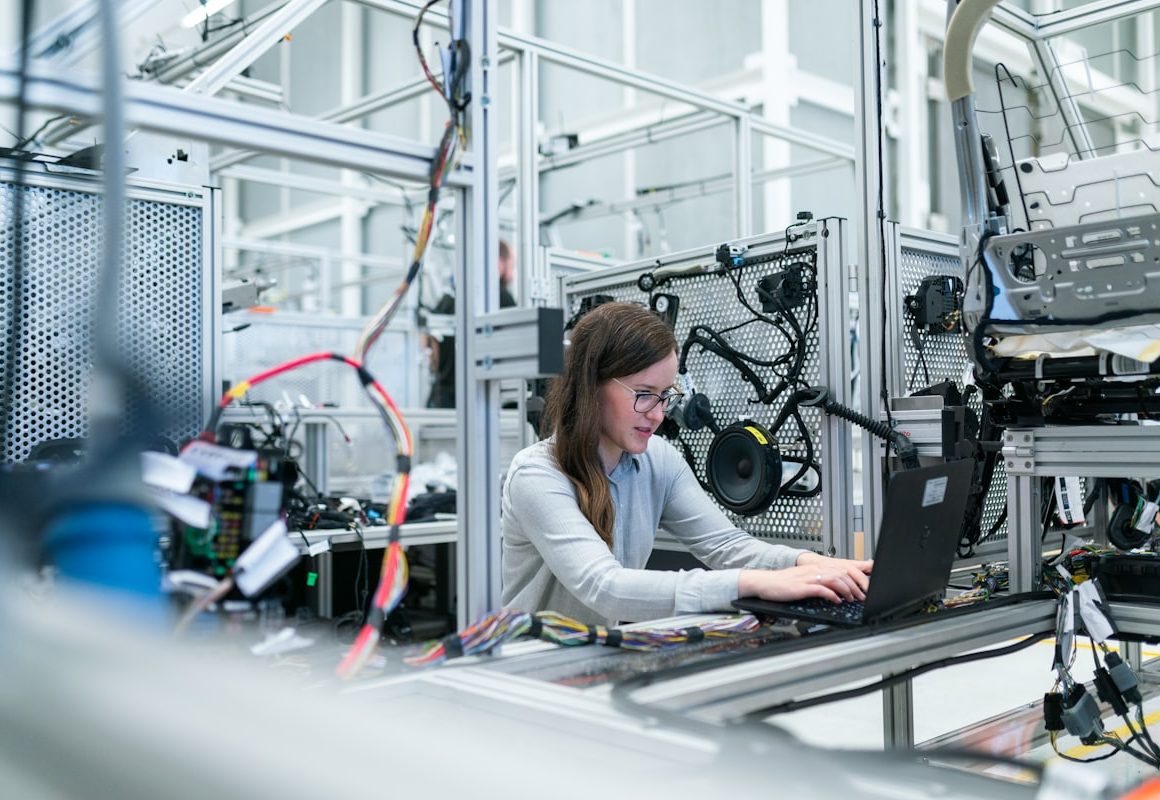
Ireland is often associated with technology, pharmaceuticals and multinational companies. But manufacturing is much broader than those headlines suggest.
Irish manufacturing spans pharmaceuticals and biopharmaceuticals, medical technology, food and ingredients, engineering, electronics, chemicals, industrial products and other specialised areas.
For a company searching for manufacturing companies in Ireland, however, the difficult part is not finding a list of names.
The difficult part is understanding which type of manufacturer is appropriate for a particular product, process, volume and supply-chain requirement.
That distinction matters.
A pharmaceutical manufacturer, a medical-device manufacturer, an injection-moulding supplier and an automotive-component manufacturer may all be described as manufacturing companies, but their capabilities, quality systems, production models and buyer requirements can be completely different.
This guide looks at the Irish manufacturing landscape from a buyer’s perspective.
What is the manufacturing sector like in Ireland?
Manufacturing remains one of the most economically significant parts of the Irish economy.
The Central Statistics Office reported that manufacturing was the largest sector of the Irish economy by output and gross value added in 2025. Manufacturing generated approximately €345.1 billion in output and €176.8 billion in gross value added at current prices in that year.
But there is an important qualification when interpreting Irish manufacturing statistics.
Ireland has a highly globalised manufacturing economy, and official industrial production statistics include activity associated with contract manufacturing and outsourcing. The CSO specifically warns that outsourcing and contract manufacturing can create substantial volatility in short-term figures.
This means that a company researching Irish manufacturing should look beyond a single headline production figure.
The more useful question is:
What manufacturing capability does Ireland actually offer for my product or supply-chain requirement?
Major Manufacturing Sectors in Ireland
Ireland’s manufacturing base is not concentrated in one industry.
Several sectors are particularly important.
1. Pharmaceutical and Biopharmaceutical Manufacturing
Pharmaceutical and biopharmaceutical manufacturing is one of Ireland’s best-known industrial strengths.
Ireland has attracted major international pharmaceutical companies and manufacturing operations over several decades.
This sector includes areas such as:
- Pharmaceutical production
- Active pharmaceutical ingredients
- Biopharmaceutical manufacturing
- Drug development
- Process development
- Manufacturing technologies
- Supporting engineering and services
IDA Ireland identifies pharmaceuticals and biopharmaceuticals among Ireland’s core sectors and continues to focus on the sector as part of its investment strategy.
For buyers, pharmaceutical manufacturing is a highly specialised field.
A company looking for general product manufacturing should not assume that a pharmaceutical manufacturer is automatically an appropriate manufacturing partner.
2. Medical Technology Manufacturing
Medical technology is another major part of Ireland’s manufacturing ecosystem.
IDA Ireland says Ireland’s MedTech sector has a 50-year track record, includes more than 300 companies, employs more than 50,000 people, and includes 14 of the world’s top 15 MedTech companies.
The sector covers areas including:
- Medical devices
- Diagnostics
- Orthopaedics
- Vascular products
- Neuromodulation
- Ophthalmic products
- Drug-delivery devices
- Connected and digital health technologies
For businesses sourcing medical products, manufacturing capability is only one part of the decision.
Quality systems, regulatory requirements, validation, traceability and production controls can be equally important.
3. Food and Food-Ingredient Manufacturing
Ireland also has a significant food and ingredients manufacturing industry.
The sector includes:
- Dairy
- Food ingredients
- Prepared foods
- Beverages
- Meat processing
- Bakery products
- Nutritional products
- Specialty foods
This is an important example of why the phrase “manufacturing companies in Ireland” covers very different business models.
A food manufacturer may be suitable for high-volume production of an established product but completely unsuitable for an engineered industrial component.
The right manufacturer depends on the product.
4. Engineering and Industrial Manufacturing
Ireland also has a broad engineering and industrial manufacturing base.
This includes companies involved in areas such as:
- Industrial equipment
- Metal products
- Machinery
- Automation
- Engineering components
- Fabrication
- Process equipment
- Electrical equipment
- Industrial systems
For product companies, this category can be particularly relevant when looking for:
- Custom components
- Fabricated parts
- Mechanical assemblies
- Industrial products
- Engineering support
- Prototype-to-production capabilities
5. Electronics and Semiconductor Manufacturing
Ireland also has an important electronics and semiconductor presence.
The wider technology-manufacturing ecosystem includes semiconductor operations, electronic components, instrumentation and related engineering capabilities.
This sector demonstrates another characteristic of Irish manufacturing:
Ireland’s manufacturing economy is strongly connected to international supply chains.
Companies may have Irish operations while sourcing components, materials or subassemblies internationally.
For procurement teams, this makes supply-chain management just as important as the physical manufacturing facility.
Some of the Largest Manufacturing Companies in Ireland
There is no single definitive ranking of the “best” manufacturing companies in Ireland.
Company size, revenue, employment and manufacturing capability are different measures.
Current commercial company datasets show a large and diverse manufacturing population in Ireland. One 2026 database lists more than 16,000 active manufacturing companies, although counts vary significantly depending on the classification system and companies included.
Examples appearing among large manufacturing-related businesses include:
- Apple
- CRH
- Linde
- Johnson Controls
- Diageo
- Analog Devices
- Kerry Group
- Smurfit Kappa
- Stryker
- Medtronic
- Abbott
- Intel
- Pfizer
- MSD
However, a list of large companies is not the same thing as a list of suitable manufacturing suppliers.
That distinction is crucial for procurement.
A multinational corporation may have enormous manufacturing operations but may not accept external manufacturing projects from smaller product companies.
Therefore, buyers should evaluate capability and commercial fit, not simply company size.
How Many Manufacturing Companies Are There in Ireland?
There is no single number that should be treated as universally correct.
Different databases use different classification systems and definitions.
For example, one current commercial dataset reports approximately 16,745 Irish manufacturing companies, while another reports approximately 16,266 active companies.
The difference illustrates an important point:
Always check how a source defines “manufacturing company” before comparing company counts.
The CSO uses formal industrial classifications for its manufacturing statistics. Its Prodcom survey covers enterprises classified under specific NACE categories and had a survey population of 5,589 for its 2025 reference period.
These figures should not simply be added together or treated as interchangeable.
Where Are Manufacturing Companies Located in Ireland?
Manufacturing is distributed throughout the country, although some regions have particularly strong industrial ecosystems.
Dublin, Cork and Galway are among the major manufacturing locations identified by commercial company databases.
But location should not be the first filter for a manufacturing buyer.
Instead, start with:
- Product requirements
- Manufacturing process
- Required materials
- Production volume
- Quality requirements
- Tooling requirements
- Certifications
- Lead time
- Logistics
- Total landed cost
Only then should location become a major selection criterion.
How to Choose a Manufacturing Company in Ireland
Finding manufacturers is relatively easy.
Finding the right manufacturer is harder.
Before selecting a manufacturing partner, consider the following.
1. Manufacturing capability
Does the company actually have experience with your manufacturing process?
For example:
- Injection moulding
- Die casting
- Sand casting
- Investment casting
- Extrusion
- CNC machining
- Fabrication
- Assembly
The terminology matters because different processes have different tooling, tolerances, materials and volume requirements.
2. Production volume
A manufacturer specialising in high-volume production may not be interested in a small production run.
Likewise, a supplier designed for low-volume or customised production may not have the economics or capacity for mass production.
Ask about:
- Minimum order quantities
- Production capacity
- Batch sizes
- Lead times
- Scalability
3. Quality systems
Quality should be evaluated before production begins, not after a shipment arrives.
Depending on the product, buyers may need to examine:
- Quality management systems
- Inspection procedures
- Material certification
- Testing
- Traceability
- First-article inspection
- Production monitoring
- Final inspection
4. Product development capability
If the product is still being designed, manufacturing capability alone may not be enough.
A useful manufacturing partner may also need to understand:
- Product design
- Design for manufacturing
- Prototyping
- Tooling
- Material selection
- Production engineering
- Cost optimisation
The earlier manufacturing considerations enter the product-development process, the fewer expensive changes may be required later.
5. Supply-chain capability
Manufacturing does not end when the product leaves the factory.
A buyer should consider:
- Packaging
- Inspection
- Documentation
- Freight
- Customs
- Inventory
- Delivery schedules
- Supplier communication
- Contingency planning
This becomes particularly important when manufacturing involves several countries.
Irish Manufacturing vs Overseas Manufacturing
This is where the decision becomes more complicated.
Manufacturing in Ireland can provide advantages such as:
- Geographic proximity to Irish buyers
- Easier local communication
- Potentially shorter supply chains
- Access to Ireland’s specialised industrial ecosystem
- Strong engineering and technical capabilities
But overseas manufacturing can sometimes provide:
- Different cost structures
- Larger supplier ecosystems for certain products
- Established manufacturing clusters
- Access to specialised processes
- High-volume production options
There is therefore no universal answer to:
“Should I manufacture in Ireland?”
The better question is:
Which manufacturing location provides the best combination of quality, capability, cost, lead time and supply-chain risk for this particular product?
Why Manufacturing Sourcing Is Becoming More Important
Manufacturing decisions are no longer simply about finding the lowest unit price.
Companies increasingly need to consider:
- Supplier reliability
- Quality
- Geopolitical risk
- Logistics
- Inventory
- Lead times
- Supplier concentration
- Compliance
- Total landed cost
The CSO’s manufacturing statistics also illustrate how interconnected Irish manufacturing is with international outsourcing and contract manufacturing.
That means modern manufacturing management often involves more than selecting a factory.
It involves coordinating the entire path from:
Product → Supplier → Production → Quality → Inspection → Logistics → Delivery
What About Smaller Irish Manufacturers?
Large multinational manufacturers receive most of the headlines, but smaller Irish manufacturers are important too.
Commercial databases contain thousands of smaller manufacturing businesses across Ireland, with many classified as micro or small companies.
For a product company, a smaller manufacturer can sometimes be a better fit because it may offer:
- More flexibility
- Direct communication
- Custom production
- Smaller production runs
- Faster decision-making
Again, the correct choice depends on the product and production requirements.
Manufacturing in Ireland: What Should Buyers Do Next?
If you are searching for manufacturing companies in Ireland, don’t start by copying the first directory you find.
Start by defining the manufacturing requirement.
Step 1: Define the product
What exactly needs to be manufactured?
Step 2: Define the process
What manufacturing process is required?
Step 3: Define the volume
How many units are required?
Step 4: Define quality requirements
What tolerances, certifications, testing and inspection requirements apply?
Step 5: Request comparable quotations
Ask potential suppliers to quote against the same specification.
Step 6: Compare total cost
Don’t compare unit price alone.
Include:
- Tooling
- Packaging
- Inspection
- Freight
- Customs
- Duties
- Rework
- Inventory
- Quality risk
Step 7: Evaluate the supplier
Look at capability, communication, quality controls, capacity and track record.
Where GMM Fits
For companies that do not simply need a factory but need help coordinating the manufacturing process, the challenge is broader than finding a company on a directory.
GMM works across product development, engineering, supplier sourcing, manufacturing management, quality control, pre-shipment inspection and logistics.
That type of support can be particularly relevant when a company needs to coordinate manufacturing across international supply chains rather than simply place an order with a local factory.
The objective is not necessarily to find the cheapest manufacturer.
It is to find a manufacturing solution that works commercially from product development through production and delivery.
Final Thoughts
Ireland has a broad and internationally connected manufacturing economy.
The country is particularly recognised for sectors including pharmaceuticals, biopharmaceuticals, medical technology, food, engineering, electronics and other specialised manufacturing activities. IDA Ireland continues to identify pharmaceuticals, medical technologies, engineering, food and other sectors among Ireland’s strategic industrial strengths.
But businesses searching for manufacturing companies in Ireland should avoid treating the market as one homogeneous group.
The right manufacturing partner depends on:
Capability + Quality + Volume + Cost + Lead Time + Supply-Chain Risk + Commercial Fit
That is ultimately more useful than simply having the longest list of manufacturers.
Navigating global procurement requires experienced boots on the ground. GMM provides comprehensive, on-site management services across major manufacturing regions to secure your production quality and schedule.
- Evaluate and qualify manufacturers using GMM's Supplier Sourcing & Auditing.
- Ensure production accuracy with GMM's Factory Quality Control & Inspection Services.
- Optimize your product designs for scale with our Design for Manufacturability (DFM) Reviews.
- Got questions about pricing or production? Contact a GMM manufacturing expert today.